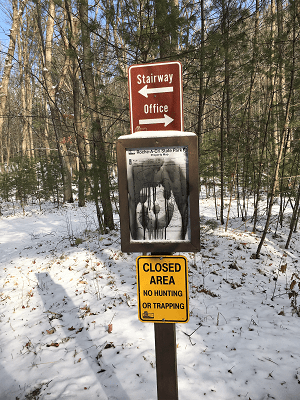
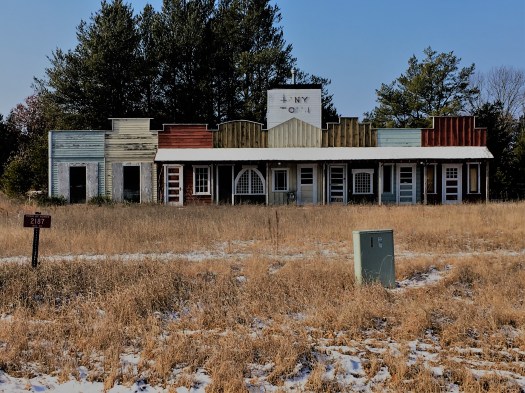
Smiley 2I’m pursuing the end of the world petroglyph idea and as part of a working trip to Wisconsin visited the only publicly accessible ones in the state. I had just read an essay in The Believer about young college men being drowned in some kind of smiley face cult conspiracy and then right before I came upon the glyphs there appeared a really frightening piece of smiley face graffiti. Lucky I’m too old to be caught up in the Zeitgeist!


Petro 600 (3)

IMG_1147 (2)

IMG_1160

IMG_1148 (3)

IMG_1154

IMG_1142 (2)


An Open-And-Shut Case, Johnson

By Joe Blair
Reposted from joeblairthewriter.com

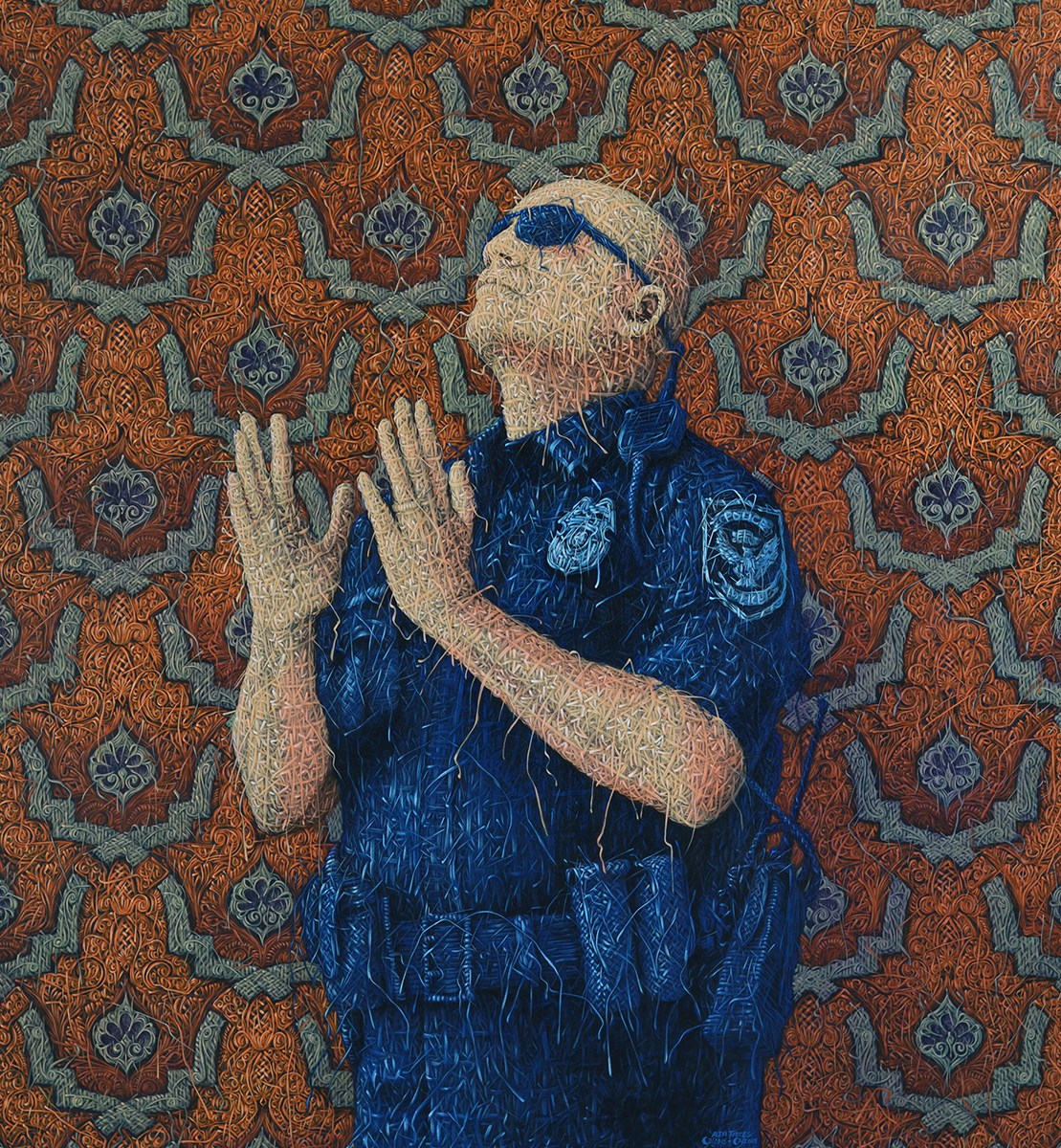
Black Lives Matter. That was the theme of the sermon. And so, near the end of the church service, when Reverend Bryant is saying, “Come up to the altar. Anyone who needs a prayer,” I being white, like Darren Wilson, and the remainder of the church being black, like Michael Brown, I certainly don’t want to come up regardless of what prayer I think I might need.

Earlier in the service, Reverend Bryant broke the congregation up into four prayer circles: one group would pray for our public institutions, one would pray for our community, one would pray for our church, and one would pray for our police officers. She didn’t feel the need to justify the first three, but of the fourth she said, “If someone breaks into my house, you know I’m calling 911.” There’s more, but I’m not listening because I’m busy trying to reconstruct the Dave Chappelle stand-up bit about why black people are afraid of cops. “Sometimes we want to call them too,” he says. “Someone broke into my house once. This’d be a good time to call them. But…” he’s shaking his head. He’s not calling the cops. “My house is too nice,” he says. And he knows that the cops are going to hit him over the head for being a black man in a nice house. The officers will then look around, hands on hips, and say, “It’s an open-and-shut case, Johnson. I saw this once before when I was a rookie. Apparently, this nigger broke in and hung up pictures of his family everywhere.”

And now, “Come up to the alter,” Pastor Bryant is saying, “anyone who needs a prayer. Anyone who needs a prayer. Please come up.” It’s odd to find myself, against my will, stepping out from my pew and walking up the center aisle. I have never wanted to draw any attention to myself whatsoever.

And now, “Come up to the alter,” Pastor Bryant is saying, “anyone who needs a prayer. Anyone who needs a prayer. Please come up.” It’s odd to find myself, against my will, stepping out from my pew and walking up the center aisle. I have never wanted to draw any attention to myself whatsoever. This has always been my tack where church service is concerned. I’m from the humble Methodist tradition of quiet prayer. I have always considered making a display of my prayers disingenuous and self-serving. But now I’m at the altar.

It occurs to me, when I arrive, that standing and walking was the easy part because I’m not sure what to do now. Another person has come up as well, a woman who announces that she’s joining the church and everyone except me is shouting and clapping and I stand there, hands clasped in front of me like an altar boy. This clapping and shouting goes on for a while. I wait, alter-boy like, unsure of what to do. I’m still facing front, feeling a bit separated from reality, when the diminutive pastor Bryant appears in front of me. “Do you need a prayer?” she says.

The chapter upon which she had based her sermon was John 9. A man had a son. The man’s son was possessed by a demon. The demon threw the man’s son to the ground and made him froth at the mouth. Sometimes, the demon threw the man’s son into the fire. Sometimes into the water. The man asked Jesus to help him. Jesus told him that if he were able to believe, then all things would be possible.

“Rabi,” said the man, “I believe.” And then, in the same breath, “Help my unbelief.”

Pastor Bryant, after reading the passage, admitted to being unsure why God had led her to it. It didn’t seem to be a natural fit with the theme she wanted to prosecute.

If my son Michael lived in the days of Christ, we would say he was possessed by a demon. These days, we say he suffers from seizures. Michael doesn’t have much language. The language he does have is unreliable. When he says, “I want pizza please,” for example, he might mean, “I want to go for a ride in the car.” Yesterday, when Michael kept asking for chicken, Deb and I decided to believe that he did actually want chicken. So we drove to the Coral Ridge Mall for Panda Express. In line, Deb wondered whether we should get him a double order of the orange chicken, which is his favorite, or one order of orange chicken and one of something else. What did I think?

“I don’t know,” I said. “Mike, do you want orange chicken?”
Mike didn’t respond at all.
“Orange chicken,” I said, “or beef?”
He didn’t respond.
“Well,” I said, “we know he likes orange chicken, so let’s just go double on that.”

Mike isn’t a small kid. At sixteen, he’s six foot one; two hundred and twenty pounds. It looks a bit odd seeing my petite wife leading him around by the arm. We have often worried that he’d realize, one day, that he didn’t need to do what we told him.

I left Deb and Mike at the table and walked across the food court to Safari where I ordered a Gyros platter. Safari always takes a little longer than the other places and I got the Gyros to go, assuming Mike would be done with his orange chicken by the time I got back. As I approached the table, I noticed that something wasn’t right. Orange chicken and fried rice were scattered across the floor. An upside-down paper plate. An upturned paper cup. Deb appeared to have pushed herself away from the table, her arms at full length and she was laughing. Mike was sitting rigidly in his seat, expressionless. I didn’t notice the police officer. Nor do I notice that the food court had fallen silent and that the patrons had vacated the space around Deb and Mike’s table. I glanced at Deb again and noticed that what I took for laughter wasn’t laughter. She was crying.

Michael had tossed his full plate of food before he attacked his mother. He first grabbed her wrists and hands, bloodying them with his fingernails. He then took a swing at her head. Deb ducked the blow and then pushed the table into Mike’s midsection to keep him away. An officer was shouting at Michael to stop at the same time Deb was shouting, “He doesn’t understand you! He’s autistic! He doesn’t know what you’re saying!”

Michael had tossed his full plate of food before he attacked his mother. He first grabbed her wrists and hands, bloodying them with his fingernails. He then took a swing at her head. Deb ducked the blow and then pushed the table into Mike’s midsection to keep him away. An officer was shouting at Michael to stop at the same time Deb was shouting, “He doesn’t understand you! He’s autistic! He doesn’t know what you’re saying!” The officer, much smaller than my son and visibly afraid, continued shouting. “You need to stand down right away! Stand down! You can’t do that!” And then, “Don’t worry, mam, I’m calling for backup!”

“My son is sixteen,” I tell Reverent Bryant. “He can’t talk much. So, he can’t tell us what he’s thinking. And he’s getting real violent.” I pause. And then I struggle on. “He attacked my wife again. I don’t know what we’re going to do.”

Reverend Bryant calls all the men of the church forward. To stand around me. “If you can’t touch brother Joe, then touch someone who is touching him,” she says. And then she, leading all my brothers and sisters in the church, says a prayer for belief.

Joe Blair is a pipefitter who lives in Coralville, Iowa, with his wife and four children. His essays have appeared in The New York Times, The Christian Science Monitor, and The Iowa Review. His critically acclaimed memoir, By the Iowa Sea, was published by Scribner in 2012.


I think of Anne Tkach

By Chris King
Originally posted April 2014 at Confluence City

I have a favorite Anne Tkach memory.

The setting: Fred Frictions’s kitchen, adjacent to Frederick’s Music Lounge in its heyday. The time: somewhere in the middle of the afterparty that never ended while Fred Jr. was running the Lounge. We were drinking, smoking, and passing the guitar, naturally. I know Roy Kasten was there, because we locked eyes in joyous amazement when the simple chords Anne was strumming turned into a song that Roy wrote with Michael Friedman, “Everything You Love Will Be Carried Away.”

Joy and amazement: not uncommon experiences, when Anne Tkach was playing music.

The specialness of this particular musical experience requires a little explanation, since most people, unfortunately, don’t know who Michael Friedman is or the kinds of songs he writes.

Roy and I went to graduate school in literature at Washington University with Michael. He was an obsessive fan of poetry and songwriting who suddenly started writing songs, frequently with Roy’s assistance on guitar. The typical Michael Friedman song is very long, intensely personal, allusive in complex ways, and for those reasons difficult to learn and to sing.

There was a time when Roy and I were the only fans of Michael’s songs. Anne and other musicians began to hear his songs through the Guitar Circle, a song-swap that we started at Michael’s instigation when he still lived in St. Louis and wanted to encourage his little brother, who was passing through town at a tough time, to focus on his own songwriting.

Through the Guitar Circle, some of Michael’s favorite musicians and songwriters – Anne, Fred, Bob Reuter, Mark Stephens, Sunyatta, Adam Reichman, John Wendland – became fans of his songwriting. Roy drew upon this incredibly deep pool of talent when he produced two records for Michael, “Stories I Have Stolen” and “Cool of the Coming Dark.” Anne played bass on three songs on “Cool of the Coming Dark,” including “Everything You Love Will Be Carried Away.”

She played those bass lines as tastefully as can be imagined, though they were anything but hard for her (or anyone) to learn. Like many of the best singer-songwriters, Michael and Roy go in for the three-chord, two-part songs. But learning a Michael Friedman lyric poses a real challenge for anyone. “Everything You Love” has five long stanzas with absolutely no predictable rhymes or familiar lines, unless you happen to have read every book and heard every record in Michael’s extensive collections.

As Anne broke into the first verse – it’s about Bob Dylan accepting an Oscar on TV, though typically for a Michael Friedman lyric, Dylan is only alluded to, never named – sitting around Fred’s kitchen table, I could see that Roy had no idea she had been learning their song on anything other than bass. It is, needless to say, the highest tribute a musician can pay to a songwriter, to learn one of their songs. Anne was a musician we admired as much as any musician in town, on Earth. It was an unforgettable tribute.

Anne eventually recorded her version of their song with her band Rough Shop on their record “Far Past the Outskirts,” which I only heard after I learned that Anne had died in a house fire. Anne played in a lot of bands, a lot of really great bands, and they released a lot of records, a lot of really great records. When I started sorting through my collection for records Anne played on, to deal with my grief, I found about 10, and I’m sure that’s less than half of her recorded output. Even these 10 records – with the bands Nadine, Bad Folk, Peck of Dirt, Michael Friedman, Ransom Note, Rough Shop and Magic City – would make for a musical career that would make anyone proud.

And that is even with a career, with a life, cut tragically short, when Anne was at the height of her creative powers as a musician and just starting to emerge fully as a songwriter and a singer. I am in awe at her accomplishment, and unspeakably saddened at her sudden loss.

I have a few more personal thoughts about Anne.

She was an incredibly supportive friend. Anne must have attended every event our arts organization Poetry Scores produced. I have many memories of her strolling into an event – in recent years, accompanied by the love of her life, Adam Hesed – and making an effort to connect with everyone before she moved onto the next friend’s gig. Our events are collaborative, so she could have been supporting any of a dozen friends, or all of us. Hundreds of St. Louis artists would say that Anne was there for them, again and again.

I must say she also handles a band break-up as skillfully as I can imagine that being done. She briefly played in a version of my band, Three Fried Men, after Robert Goetz invited her in on drums (another instrument she mastered). As dozens of musicians would tell you, she was a pleasure to play with, learning songs without apparent effort, knowing what to play without being told, having fun in the process. Robert and I had a falling out after only a few band rehearsals, unfortunately, and I lost Anne in the split. I don’t remember how she told me she’d rather play music with Robert than with me – my memory sparing my ego, perhaps – but I do remember it left no bad taste whatsoever. My friendship with Anne continued without a hiccup.

I am very relieved to say Robert and I later patched things up, and he was the next person, after Roy, whom I called when I heard that Anne was gone. I needed to speak to someone with whom I had shared, however briefly, the experience of playing music with the one and only, the irreplaceable and unforgettable, the immortal Anne Tkach.

Anne’s friends have been seeing a lot of each other since she died. A series of events in the local music and arts scene became tributes to Anne – wakes, in a way – in the week and weekend after we lost her. The way we lost her, in a house fire apparently sparked by a lightning strike, left us all numb and perplexed. The fact that she was sleeping in that house to care for her ill father only made the loss more deeply unjust and inexplicable. We have all been talking about that.

I was talking about that with Robin Allen, a fellow musician, at Dana Smith’s art show on Friday. Dana is also a musician whose band Cloister gigged with Anne’s bands. Everybody at the art show was grieving. I talked to Robin about how the whole lightning storm thing was making it harder for me to grasp her death and come to terms with it.

“In a way,” Robin said, “the way she died, it’s like we all got struck by lightning.”

We were also talking about that the night before, the night of the day we all heard the tragic news. We were drinking and waking Anne at Ryder’s, the bar owned by the love of her life, Adam. The same violent storm system that apparently killed Anne was still blowing through St. Louis. I was sitting near the front door with Robert Goetz, Gina Alvarez and Kevin Belford.

The storm kept blowing the door of the tavern open, and then closed again. Since the door was also being opened and closed by people coming into the tavern, it was a little weird whenever the door opened and closed, but nothing came into the tavern but a little bit of the storm.

I decided that Anne was a part of the storm now, and that Anne kept coming into the tavern, connecting with her friends, and then moving onto another friend’s gig. Whenever a lightning storm comes to St. Louis now, I will think of Anne coming to see us. Whenever I hear her music or see lightning in the St. Louis sky, I will think of Anne Tkach.

Adalwolf & Mossyback

Then there was Adalwolf. He lived up on the ridge in what was basically a cabin, on the edge of the Amana timber. He owned some of his own timber, hunted and mushroomed it. And the view was pretty good. Adalwolf could see the Wolfe place from up there, and almost all of the bachelors. This brought him under some suspicion, of course. He deflected it well. One of the more recent German immigrants to the county, he still had a bit of an accent and made a good show of not understanding fast talk, oblique talk, or dirty talk. That last one was part of a huge joke that kept on giving.

The other thing that diverted attention from Adawolf was the movie production that descended on his place in the spring of 84. Adawolf got himself installed as advisor on the flick and nearly foundered on the rich craft service. The movie was about a pioneer girl who falls in love with a German frontiersman named JOACHIM.

The Cedar Rapids Gazette was out there at least three time interviewing the cast, and then the crew and then Adawolf. Same with TV 9, 2 and even 7. The Adawolf coverage was probably the best. We had to admit. He was charming, even more than the actress who played the pioneer girl, Elsa. She got her break as one of the cousins on Anne of Green Gables and then graduated to a zombie franchise. You can imagine how Elsa’s arrival stirred up the bachelor pot.

*****

I’m not much of a party hound; that’s probably why I’m still a bachelor. There were always lots of keggers up past Adawolf’s place. It was just wilder up there, pretty wooded for a tame and scored out place like Iowa. The guys always got the girls to coil up tighter against them by mentioning Mossyback. Mossyback was our version of Big Foot. “He always waits at the edge of light,” said Jim, “the edge of any light.” Gail Becker, the party’s hostess, claimed the outside window sills of the ranch house she lived in with her sister were covered with strange pockmarks, evidence of Mossyback gnawing in frustration and sadness on the wood. That was the summer the B52s first record came out. “Dance this Mess Around” and “Rock Lobster” were played only in the party’s dying throes. The “cool” kids didn’t get those masterpieces. In fact, if it wasn’t Boston or Foreigner, it cleared the room. It wouldn’t be until college that the straggle of gay kids and weird kids staring uncomfortable at each other across the room could finally break loose from the walls they were holding up and enter the ring.